
Searching Liberty County Civil Dockets
Liberty County runs its civil case lookup through the official Liberty Enterprise Justice Portal. An exact cause number gets you the fastest result. Without one, search a plaintiff, defendant, petitioner, or respondent by legal name. Then narrow the docket results by court and date.
There is no stable cause-number formula here. Copy every character straight from a petition, citation, notice, or clerk message. Before opening the event register, confirm one thing. The parties, court, case type, and filing date all should line up.
- Open the county portal and select Smart Search.
- Search the exact cause number or a party name.
- Open the matching case and read events in date order.
- Review service, pleadings, motions, orders, and settings.
- Request a plain or certified document from the proper clerk.
Inside a Liberty County Civil Docket
The header of a Liberty County civil docket names the cause, style, assigned court, filing date, category, and status. Below that, the register logs events. Petitions, answers, service, motions, notices, hearings, orders, judgments, appeals, and later enforcement steps all appear there when public.
| Case Number | Exact clerk identifier; no local pattern should be guessed. |
|---|---|
| Parties | Plaintiff and defendant, or petitioner and respondent. |
| Filings | Petitions, answers, service returns, and public exhibits. |
| Motions | Dated motion filings and related orders when available. |
| Judgment | Judgment, nonsuit, dismissal, default, or other outcome. |
Civil Case Types on the Docket
Civil matters in Liberty County split across three court levels. District civil dockets carry the heavy cases. Think major contract disputes, tort claims, property fights, family matters, and more. County Courts at Law share the civil work, and Government Code §§25.1481 and 25.1482 set their range at controversies above and not more than ,000 under the statutory calculation. Justice courts take the small stuff. That means small claims, debt claims, evictions, and other limited civil disputes.
- Contract and debt claims
- Personal injury and other tort claims
- Property and real-estate disputes
- Public family matters within court authority
- Probate, eviction, or small claims in the proper court
Civil Docket Settings and Hearings
A setting might be a motion, a temporary relief hearing, a pretrial conference, a trial, or a probate matter. Search Hearings lets you query by date range. Court coordinators confirm current trial and motion calendars directly.
A reset or continuance only moves the setting; it never decides the claim. Check later entries and the scheduling order. Then verify the live date through the Liberty County court dates page.
Civil Docket Access Rules
Texas treats civil court records as presumptively open. Even so, the clerk must apply court rules on sealing, sensitive data, and confidential case types, and the Public Information Act does not override those judicial-record rules.
Key Rules:
Civil Rule 76a sets the process for sealing civil court records.
Civil Rule 21c requires protection of sensitive personal data.
Government Code §552.0035 preserves judicial access rules.
Civil Rule 76a sets the process for sealing civil court records.
Civil Rule 21c requires protection of sensitive personal data.
Government Code §552.0035 preserves judicial access rules.
Civil Rule 76a sets the process for sealing civil court records.
Civil Rule 21c requires protection of sensitive personal data.
Government Code §552.0035 preserves judicial access rules.
Liberty Civil Jurisdiction Limits
Government Code sections 25.1481 and 25.1482 give the Liberty County Courts at Law concurrent civil jurisdiction with the district court. That applies when the amount in controversy exceeds $500 but stays at or below $250,000 under the statutory calculation. Interest, statutory or punitive damages, attorney fees, and costs do not count toward that threshold. The same courts also hold family and probate authority. That concurrent power is described by law.
This split matters when you search. A Liberty County dispute can sit on a district, county-court-at-law, probate, or JP docket. Trust the case caption and the assigned court. Treat the subject matter alone as a weaker routing clue.
Service and Answer Events
A filed petition opens the civil register. Service is what gives the other side formal notice. The docket may show citation issuance and return. It may also show an answer, amended pleadings, or a default request. Keep one thing clear. A service entry records a procedural step and decides nothing on the merits.
When the portal shows no image, skip the broad request. Ask for the specific return, answer, motion, or order rather than asking for everything. A narrow request lets the clerk find the record fast and quote the correct copy charge.
Liberty Probate Hearing Path
Probate and guardianship matters run through the County Clerk and the appropriate county court. The official probate material says hearing notice is posted at the courthouse. It also generally advises about a two-week waiting period before a hearing. Treat that as a local scheduling point. It is not a promise that every matter is heard exactly two weeks after filing.
Protected medical, financial, or guardianship material may not be available that way. An ordinary civil pleading is easier to view. Ask for the public docket first. Then pinpoint the document, and let the clerk apply the governing access rule.
District and County Clerk Split
The District Clerk holds district civil and family files. The County Clerk keeps county-court civil, probate, and guardianship files. Both offices sit at 1923 Sam Houston Street in Liberty. The shared courthouse does not merge their custody. The County Clerk is in Room 209 and lists 936-336-4670; the District Clerk lists 936-336-4682. Know which office has your file before you call.
Request precisely: supply the cause number, assigned court, parties, document title, approximate date, and whether the copy must be certified.
When a Civil File Is Offline
Older Liberty County records may be archived or microfilmed. A public portal can show an index without the underlying document. Ask whether the file is onsite, archived, or viewable at a courthouse terminal. Also ask what formats can be released, whether certification is available, how payment is accepted, and what turnaround applies. A portal screen helps with research. But a clerk-certified copy is the right choice when an agency or legal process needs authentication.
Liberty Civil Record Screens
The County Clerk civil page describes county civil access.
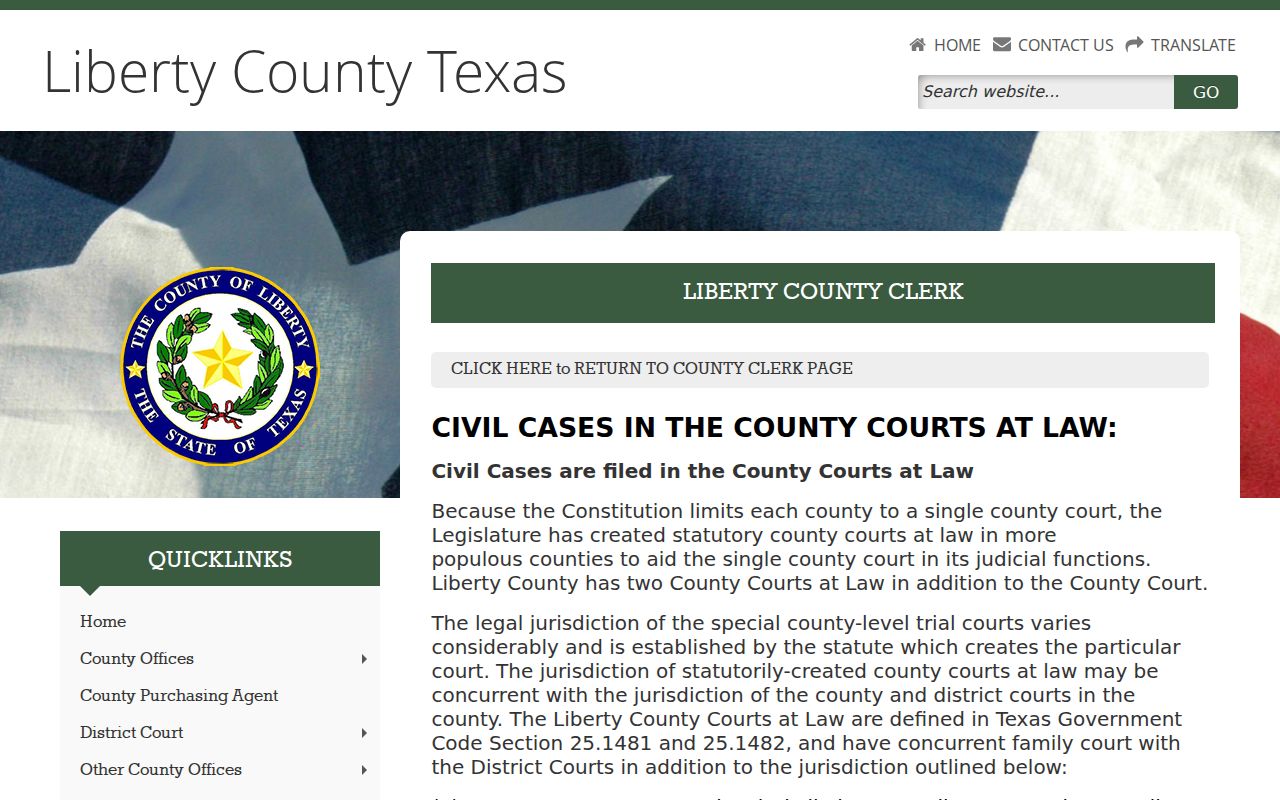
Record path: the assigned court still decides the correct route to a civil record. The guardianship page supplies probate hearing details.
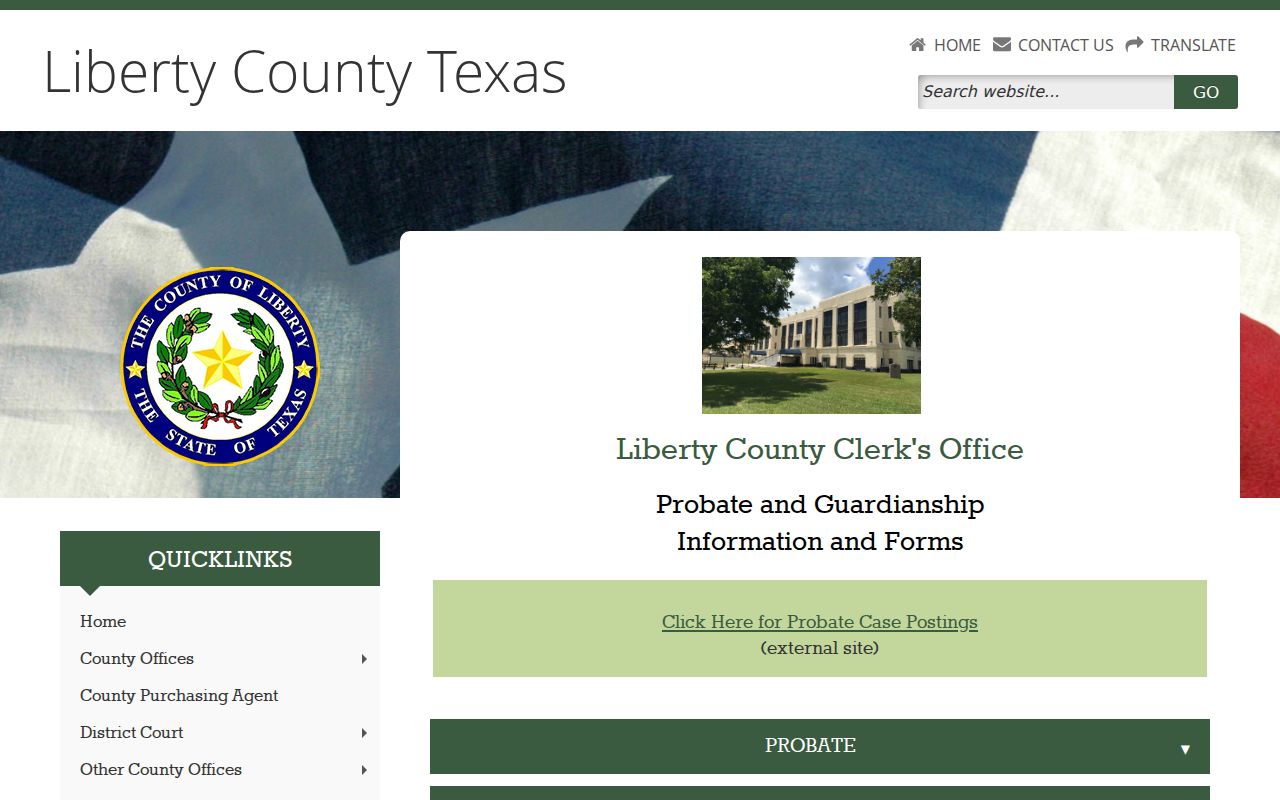
Protected guardianship material may have narrower access.
The county directory confirms official office contacts.
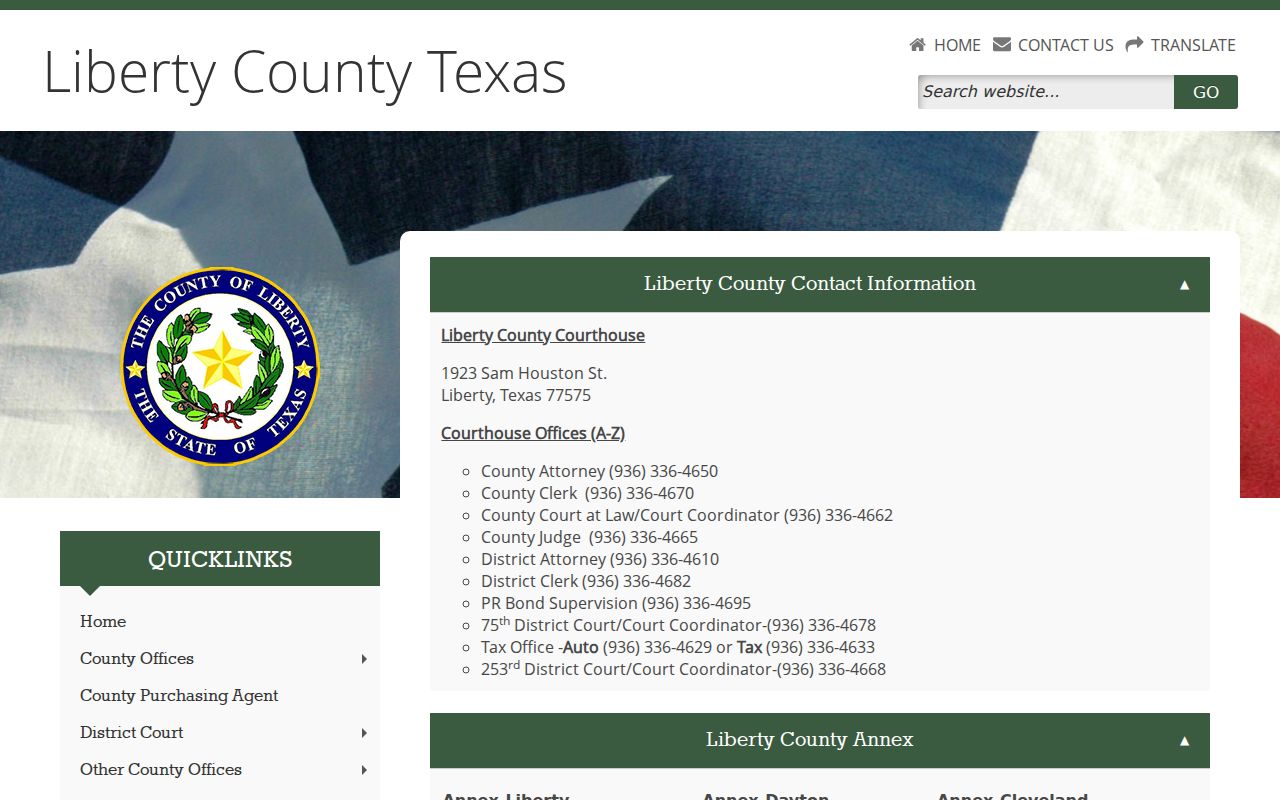
Use the directory to verify the right clerk before sending a request. The misdemeanor record page illustrates a different County Clerk file type.
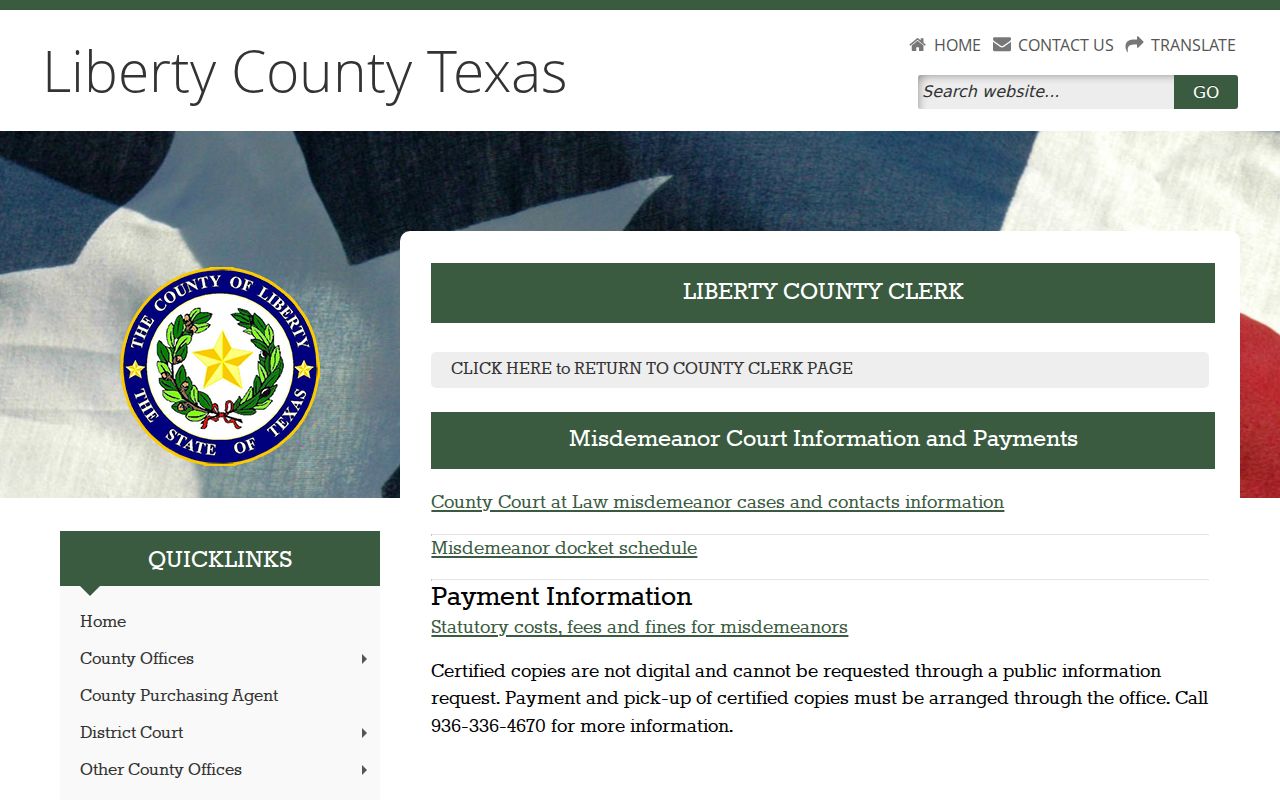
Its copy rule should not be assumed to govern every civil file.